 Skip to content

What Size Moving Boxes Do I Need?
Use small boxes for heavy items such as books, medium boxes for everyday household belongings, and large or extra-large boxes for lightweight bedding. Choose specialty cartons for dishes, hanging clothes, and framed items. Check actual dimensions because size labels vary by supplier.
The right box has room for the item and its protective packing while staying manageable to carry. A large carton may be right for pillows but a poor choice for cookbooks. Start with what you are packing, then choose the box.
What Are the Standard Moving Box Sizes?
Small, medium, large, and extra-large are common moving box categories. The examples below use U-Haul’s listed dimensions and nominal capacities. They show how sizes compare within one supplier’s range; they are not universal measurements.
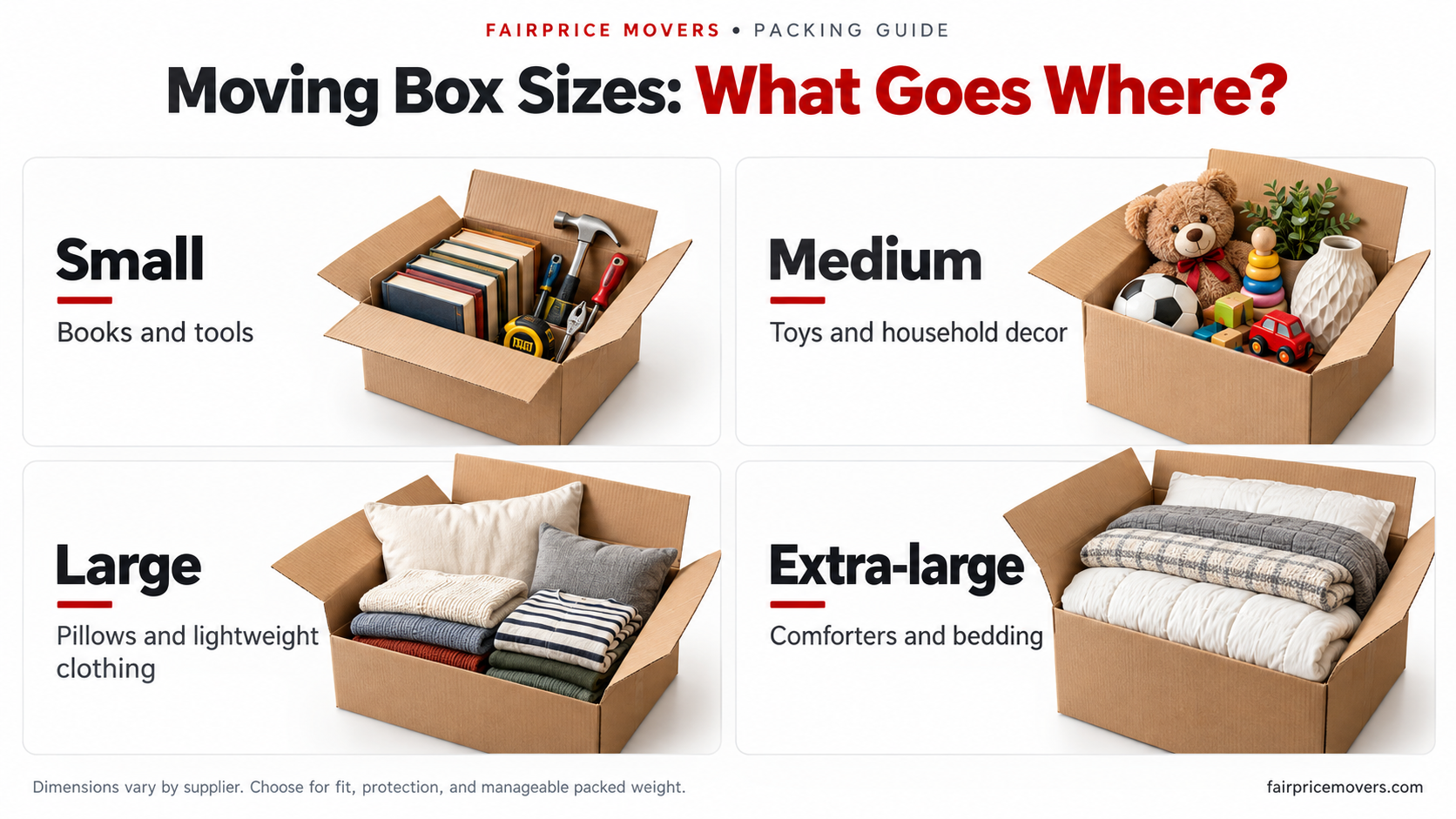
| Box size | Listed dimensions in inches (length × width × height) | Listed capacity | Good uses |
|---|---|---|---|
| Small | 16⅜ × 12⅝ × 12⅝ | 1.5 cu. ft. | Books, small hand tools, and other dense items in manageable loads. |
| Medium | 18⅛ × 18 × 16 | 3 cu. ft. | Toys, household decor, and small appliances with room for cushioning. |
| Large | 18 × 18 × 24 | 4.5 cu. ft. | Pillows, stuffed animals, and lightweight folded clothing. |
| Extra-large | 24 × 18 × 24 | 6 cu. ft. | Bulky, lightweight bedding and comforters. |
Supplier specifications checked October 27, 2026. Listed capacities are nominal volumes, not verified usable interior space. Packing suitability also depends on the item, carton construction, cushioning, and packed weight.
Are Moving Box Sizes the Same at Every Store?
No. A medium moving box from one supplier may have different dimensions from another supplier’s medium box. The Home Depot’s moving box guide, for example, lists medium examples of 18 × 18 × 15 inches and 22 × 16 × 15 inches. Both differ from the U-Haul medium example above. Individual products and ranges can change.
Compare all three measurements for the carton you plan to buy. Volume tells you how much space a box has in general; it does not tell you whether a wide serving dish or tall appliance will fit. For close-fitting items, confirm the usable inside dimensions and allow room for wrapping.
Measure the protected item. A 16-inch-wide object may fit inside a particular carton before wrapping but be too tight once its corners and surfaces are cushioned. Select the box around the complete packing arrangement.
What Size Box Should You Use for Each Household Item?
Choose by density, shape, and fragility. Start with the suggestions below, then adjust for the item’s measurements and the weight of the finished carton.
| What you are packing | Start with | Check before sealing |
|---|---|---|
| Books, magazines, small tools | Small box | Divide dense loads before they become heavy or awkward. |
| Dishes and glasses | Dish or glass packing carton | Leave room for individual wrapping and appropriate dividers. |
| Small kitchen appliances | Original fitted packaging, or a suitable small or medium carton | Measure the wrapped appliance and secure loose parts. |
| Toys and household decor | Medium box | Move unusually bulky, light items to a larger carton; separate breakables. |
| Folded clothes | Medium box; large for lighter garments | Denim and other dense clothing can make a large box heavy. |
| Pillows, comforters, soft toys | Large or extra-large box | Flaps should close flat without bulging sides. |
| Hanging clothes | Wardrobe box | Check hanging height, bar assembly, and loading instructions. |
| Framed pictures and mirrors | Fitted picture or mirror box | Include space for corner and surface protection. |
What Size Moving Box Is Best for Books?
A small carton is a good starting point for books because a dense load can become difficult to carry long before a large box is full. Split the contents when necessary, and use lightweight cushioning for remaining gaps.
A half-filled large box of books is usually a reason to use a smaller carton. Extra space does not mean you should add more weight.
What Size Box Is Best for Bedding?
Large and extra-large cartons suit pillows, comforters, and bulky linens. They provide room without the density of books or cookware. Pack clean, dry contents and close the flaps without forcing them.
If the carton blocks your view or is too wide to grip securely, divide the contents or arrange appropriate handling help.
Should Dishes and Cookware Share a Box?
Separate fragile dishes from heavy pots and appliances. Choose the carton after allowing for cushioning and dividers, and keep pieces from touching or shifting.
Our kitchen packing guide covers preparation for dishware, utensils, appliances, and pantry items.
What Size Boxes Do You Need for Clothes?
Use medium boxes for folded garments and larger cartons selectively for light, bulky clothing. Jeans can make a large carton heavy. Choose a wardrobe carton when clothes need to stay on hangers.
See our clothes packing guide for more ways to prepare a wardrobe for moving.
When Should You Use Specialty Moving Boxes?
Specialty packaging addresses shapes and protection needs that standard cartons may not handle well. Check what the product includes: a dish carton, divider kit, and complete packing kit are not necessarily the same purchase.
Dish and Glass Cartons
Use suitable cartons, individual wrapping, and fitted dividers to separate breakables. Follow the kit’s assembly instructions. A stronger outer box does not replace protection between the contents.
Wardrobe Boxes
A hanging bar lets garments stay on hangers. Select a box tall enough for the clothes and follow its loading instructions. Ordinary folded shirts do not automatically need a wardrobe carton.
Picture and Mirror Boxes
Check the full frame dimensions and thickness against the packaging’s fit range. Include corner and surface protection. Ask about custom packing for unusually large, valuable, or delicate pieces.
TV and Electronics Boxes
Use original fitted packaging when available. Otherwise, select packaging compatible with the equipment’s complete dimensions and follow the equipment maker’s handling instructions. Screen diagonal alone does not establish fit.
U-Haul’s box selection guide provides standard and specialty packaging examples. For delicate pieces, FairPrice Movers can discuss packing services and the materials appropriate for the move.
How Heavy Should a Packed Moving Box Be?
Keep each packed box within the carton manufacturer’s load limit and within the handling ability of the people moving it. Those are separate checks. U-Haul lists a 65-pound capacity for its standard small box. That rating describes the carton; it is not a recommendation for someone to lift a 65-pound load.
There is no single packed weight that works for every person and every route. The NIOSH lifting guidance considers weight alongside reach, twisting, lifting frequency, duration, and grip. Its workplace assessment method explains why weight alone cannot describe every lifting task.
For a household move, also consider stairs, tight turns, repeated trips, and whether you can keep a secure grip. Split a difficult load, use appropriate equipment, or arrange help before it reaches the truck.
Heavy-duty does not mean easy to carry. A stronger carton may have a higher rated capacity, but the contents still weigh the same. Check the specific product rating and keep the load manageable.
How Can You Tell Whether a Moving Box Is the Right Size?
The box should hold protected contents securely, close flat, and be manageable along the moving route. Check one packed carton before repeating the same setup across a room.
- Inspect the carton.
Use a sound box. Replace cartons that are wet, crushed, torn, or separating at the seams.
- Allow for protection.
Place wrapped items inside with the cushioning or dividers they need. Do not force fragile pieces against the walls.
- Limit movement.
Fill gaps with suitable packing material. If the box needs excessive filler, a smaller carton may fit better.
- Check the shape and weight.
The flaps should close flat without bulging sides. Divide contents that make the load too heavy or awkward.
- Seal and label.
Follow the carton’s assembly instructions and use packing tape. Label the room and contents; identify fragile contents where appropriate.
U-Haul’s fragile-item packing guidance explains the balance between room for cushioning and excess space that lets contents shift. Use the packing instructions appropriate to the item and packaging you selected.
Frequently Asked Questions About Moving Box Sizes
Is it better to use small or large boxes for moving?
Use small boxes for dense, heavy contents and larger boxes for lightweight, bulky belongings. Choose by the finished weight, required protection, and ability to handle the carton along your route.
Can I use medium boxes for everything?
Medium cartons work for many household belongings, but not every item. Books may need a smaller carton, bulky bedding may need more room, and hanging clothes or flat fragile items may need specialty packaging.
What are the dimensions of a medium moving box?
One U-Haul medium box is listed at 18⅛ × 18 × 16 inches, with a nominal capacity of 3 cubic feet. Other suppliers use different measurements. Check the exact carton you plan to purchase, including usable inside dimensions for a close fit.
Should I fill a moving box all the way?
Support the contents and fill gaps with appropriate lightweight packing material so items do not shift. Do not add dense belongings simply to use remaining space. Close the flaps flat and keep the packed carton within its rating and manageable to handle.
Can I reuse cardboard boxes for moving?
Reuse a carton only if its condition, construction, dimensions, and load rating suit the contents. Avoid boxes with moisture damage, weak seams, tears, or crushed panels. Fragile items still need the right wrapping and internal protection.
Do heavy-duty boxes let me pack more weight?
A heavy-duty carton may have a higher product rating, but it does not make a heavy load easier to move. Check that specific box’s limit and divide contents that become difficult to handle.
Do movers provide boxes and packing materials?
FairPrice Movers can provide packing materials based on the move and packing service selected. Ask which cartons, wrapping supplies, packing work, and unpacking options your estimate includes before purchasing supplies separately.
Plan the Items That Need More Than a Box
Large appliances need their own equipment, preparation, and route measurements. These weight guides can help you share useful details when planning your move.
Need Help Choosing and Packing Your Boxes?
Tell FairPrice Movers what you need packed, including fragile items, stairs, and access restrictions. We’ll help you understand the packing options and supplies included in your moving estimate.